When everyone is vibe-coding, how do you stand out?
We are emotional beings making emotional decisions. Yet we continue to communicate as if logic comes first.
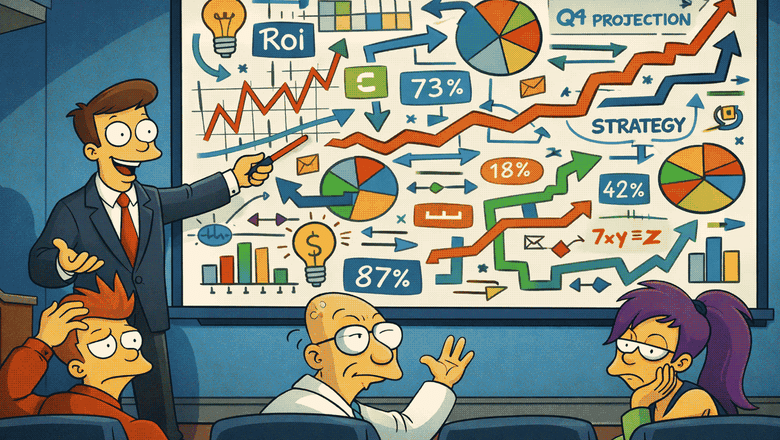
You can build a product faster than ever. AI, vibe-coding, and ready-made frameworks have removed many technical barriers. And yet, chances are you’ll still lose. Not because your product is bad. But because you’re communicating as if logic makes people care.
I’ve spent more than 20 years working with communication and branding, primarily in digital and technology-driven environments. Today, I work closely with startups, scaleups, and innovators, often at the idea, prototype, or early product stage.
Most entrepreneurs we meet share the same strengths:
- deep domain knowledge
- genuine passion for their concept and idea
- a strong drive to succeed
They know what they are doing, but they struggle to communicate it.
Most pitches are filled with market analyses, competitor maps, graphs, frameworks, and feature lists. Everything is rational. Everything makes sense. And still, as a listener, I’m left with the same thought: “I understand what you want to build, but why should I care?”
A classic mistake: pouring out rational arguments
In tech environments, communication is often treated as a translation exercise:
“If we just explain the product clearly enough, people will get it.” But understanding is not the same as caring. Think about the difference between what and why.
What focus on:
- what problem you solve
- what features you offer
- what makes you different
- what market you are aiming at
- what are your competitors dong
- etc
From a branding perspective, that’s only the starting point.
How about why?
- Why you?
- Why does this exist?
- Why should this matter to me, personally?
- Why do you want me to feel ..... when I encounter your product?
- Why do you want me to perceive you like.... ?
- etc
When communication is purely rational, your audience understands (if you explain it well), but feels nothing. Your target group, no matter what setting, don’t choose with logic. They justify with it. Rational arguments are validation. If you haven’t created an emotional connection, no amount of data, charts, or feature comparisons will save you. You’re informing, not communicating.
Enter emotions like:
- trust
- relevance
- confidence
- identification
AI and vibe-coding make this problem worse, not better
AI dramatically accelerates product development:
- features can be copied overnight
- interfaces can be replicated
- bad, good enough & good products flood the market
As a result, functionality is becoming commoditised. It’s no longer a differentiator.
What cannot be copied as easily is:
- your story
- your values
- your perspective
- your reason for caring
- your passion
- your style
- your...
In a flood of technically similar products, you and your branding becomes your primary competitive advantage.
From information to communication
In design thinking, you often start by defining what:
- what problem are you solving?
- for whom?
- and why is it important?
The next step is how you communicate it, and that’s where emotion enters the picture.
You have to decide what you want people to feel when they encounter your brand.
Confidence? Relief? Curiosity? Ambition? Belonging? This requires a shift from demographics to psychographics. You need to understand motivations, fears, aspirations, and context by stepping into the mindset of your audience, not just describing them from the outside. Only then can you move from information to communication.
Branding is the human advantage in a rational, automated world
Branding is so much more than logos, colours, or surface-level aesthetics. It’s about the relationship between you and the people you want to reach.
In an AI-driven landscape, strong brands:
- build trust in a world of synthetic content and scepticism
- act as a guarantee of quality, accountability, and human oversight
- help people navigate complexity by offering a clear point of view

How we work with this in practice
At Yulieta, we understand this, both branding, concept and product development, as well as technical development. In the first part of the process, we help you clarify your what, and then transform it into communication that actually resonates.
We believe in asking the right questions. Not just about features and benefits, but about emotional relevance, differentiation, and connection. We use structured trigger questions to uncover why someone should care in the first place. Then we apply creative techniques to dramatise and humanise the message.
All of this to ensure that when you build your product, hopefully together with our excellent product development team, you win your battle.
A gift for you - download our complete trigger question sheet for branding here.
Let’s wrap it up
Numbers matter. Technology matters. Rational arguments matter.
But people act on emotions, so dare to be human. Tell your story. Show why you care. Because in the end, the real question is not what your product does, but what people feel when they encounter it.