The Generalist – the Master of the New Universe?
Could Artificial intelligence be reshaping the value of skills in the workplace, shifting the advantage from specialists to generalists?
Could Artificial intelligence be reshaping the value of skills in the workplace, shifting the advantage from specialists to generalists?
For hundreds of years, specialisation has driven productivity. We follow the principle that dividing labor into narrow tasks increases efficiency. Education systems, careers, and organisations have all been built around this idea.
However, AI is now disrupting this model. Many specialised tasks, such as coding, legal analysis, and medical diagnostics, can be performed faster and more accurately by machines. As a result, the value of narrow expertise is declining, and the domains once controlled by specialists are shrinking.
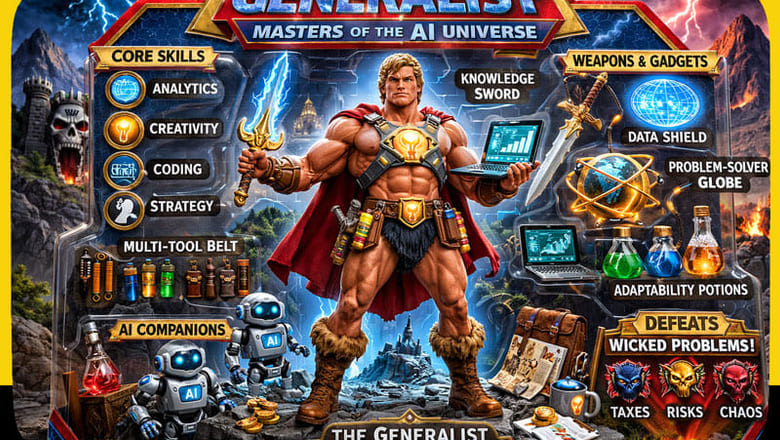
In contrast, generalists thrive in complex and unpredictable environments where problems are not clearly defined. These problems require adaptability, creativity, and the ability to connect ideas across disciplines. Generalists excel at gathering knowledge, spotting patterns, and applying insights from one field to another.
The most powerful combination is a generalist who can effectively use AI. By using AI tools, individuals can perform tasks that previously required teams of specialists, greatly expanding their capabilities.
What can you do?
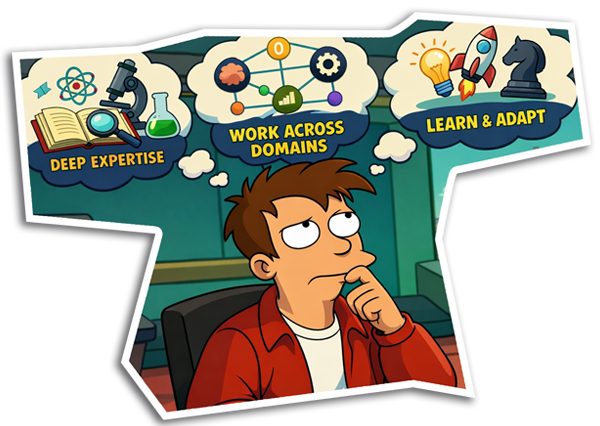
Develop deep expertise in one area while maintaining a broad knowledge across others. In the AI era, the most valuable skills are learning quickly, thinking strategically, and working across domains.
Are we seeing the end of the specialist and the rise of the generalist? Are human versatility the new competitive advantage?