War, work, family and everyday life: how do they find the balance?
Valerii is co-founder and CTO of Innocode, but now works with infrastructure and systems integration in a Ukrainian unit that intercepts drones. Almost one in five employees serve in the Armed Forces of Ukraine. Even so, the company still delivers software to customers in Scandinavia and Europe.
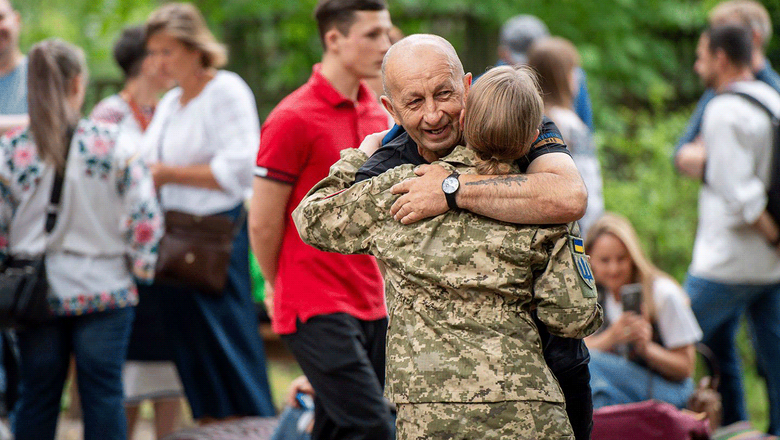
On paper, Valerii is both co-founder and still CTO of the Norwegian-Ukrainian technology company Innocode. But for the past few years he has had a very different employer: the Ukrainian army. Today he works with infrastructure and systems integration in a unit that intercepts Russian drones. Almost one in five of his colleagues now serve in the Armed Forces of Ukraine. Even so, Innocode keeps delivering software to its customers in Scandinavia and Europe.
On 24 February 2022, the world woke up to the news that Russia had launched its full-scale invasion of Ukraine. The development office in Lviv was the heart of the company. Suddenly the future of both the employees and the company was uncertain.
Life for the colleagues in Ukraine changed overnight. Suddenly they were living in a war. Tough decisions had to be made fast. Many employees stayed in Kyiv and Lviv, while others moved abroad, for example to Poland, Germany and the Netherlands. In the middle of all this, the work still had to be done. Deliveries to the company's roughly 200 customers had to continue despite the situation.
Servers, code and data were already in Google Cloud in the EU, with extra backups at other cloud providers. It was not the technology that created the greatest uncertainty.
Morten Holst, partner and head of product, remembers the first days well.
"Those first days, when the Russians rolled toward Kyiv and left destruction and terror in their wake, the safety of our people and their families was the big question. We had an office in Kyiv at that time, so following the column edging closer is an experience that is impossible to describe. We were always seeking information in a situation that changed by the hour," says Holst.
The office in Lviv became something else entirely.
"I remember vividly the collective response in the office in Lviv, and how everyone got together to help out. Our office was a voluntary refugee hub for many weeks."
At the same time, the work went on.
"In the middle of all that, the support we received from clients and partners was heartwarming. We didn't miss a single deadline, though. Looking back, that seems totally absurd, but our people got superpowers."
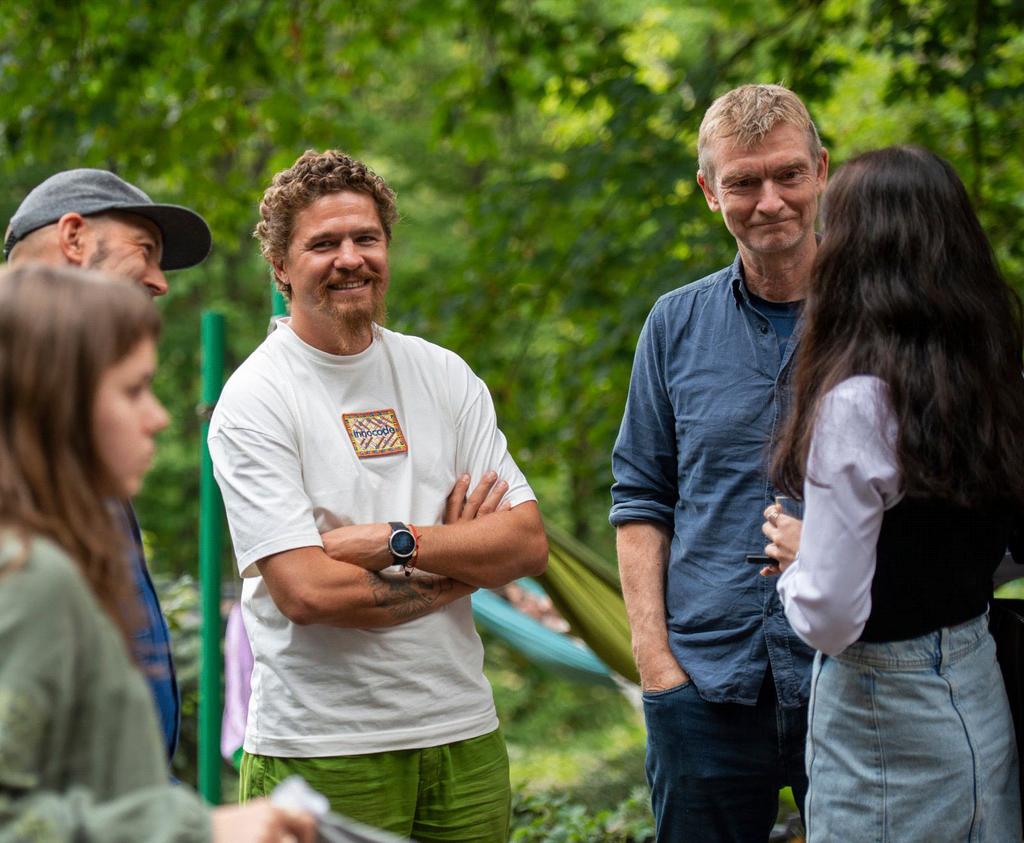
More than four years later, nine of the company's roughly 50 employees have entered military service. Several of them now use the skills they built up in a tech company in a completely different setting.
From CTO to drone interception
Valerii co-founded Innocode in 2010 and is still formally the company's CTO, although others have stepped into his role while he serves. Today he serves in a unit that works on intercepting drones. He has been in the Ukrainian armed forces for more than three years.
He works with infrastructure, innovation and systems integration to make operations more efficient, providing the teams that intercept enemy drones with the data they need.
"It's definitely not a front line position in terms of being a trooper, but the systems we are supporting are used at the front line, so there is a constant communication and feedback loop," he says.
Without his IT background he could not do the job, Valerii says. He constantly has to learn systems and tools he has never used before. But here the usual tricks do not work.
"I can't use Google or AI. Military software and hardware are classified, so there is no documentation on the internet and no one to ask on Stack Overflow," says Valerii.
When the documentation does not exist, he writes it himself. Everything he figures out, he documents, so that colleagues at other locations can use it. According to Valerii, this means the unit can develop and roll out the systems faster.
His view of what counts as urgent has also taken on a new dimension.
"Here I have experienced that solving the urgent problem is my responsibility, not, for example, the DevOps colleagues' at Innocode. I am on duty 24/7 to monitor the systems and the infrastructure."
Before he applied to the unit, he told his colleagues clearly: Don't count on me.
Today his Innocode work is limited to a short weekly meeting with COO Ira Nahorna, when possible. The team has taken over his responsibilities.
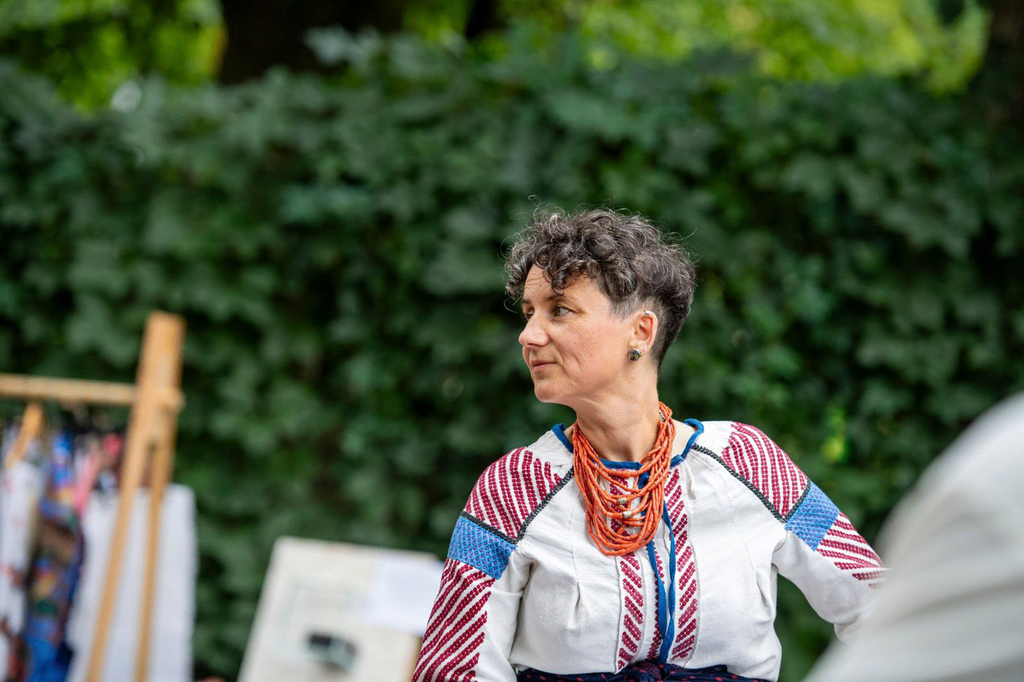
But the move from a tech company to the military has also brought surprises.
"It surprises me to say it, but somehow I actually enjoy being here, even though it was never my dream to serve," he says.
So what is it that he enjoys?
"The pace of innovation and the feedback cycle, the scale on which the solutions and approaches are implemented, and obviously the feeling of contributing directly. I'm lucky to work with talented people, both peers and the people I report to," says Valerii.
But the context matters, he stresses. His unit is a special one, and Ukraine is fighting an enemy with far greater resources.
"This is a war of extinction, where the enemy has far more resources of all kinds. Innovation and flexibility are not terms you find in a peacetime army or in an army with plenty of resources. The way we are working and fighting is dictated by necessity."
The only typical thing is that there is work every day
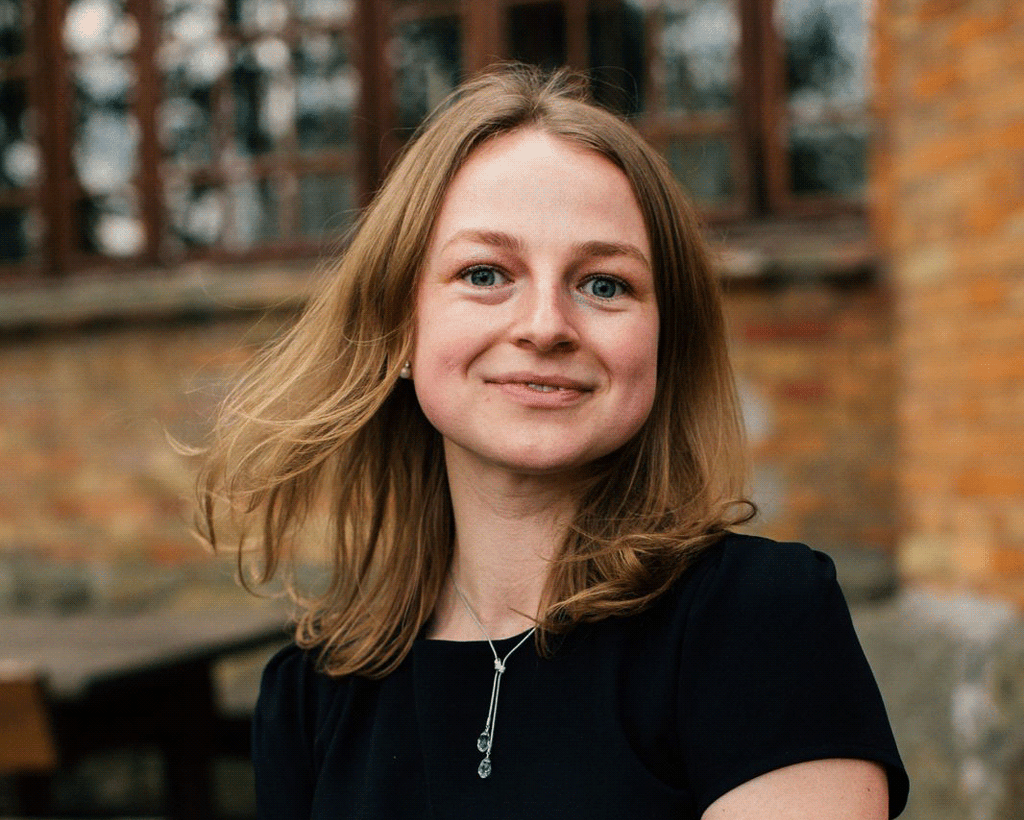
Khrystia joined Innocode in April 2022, in the first spring of the war. Her title back then was "office-event-happiness-communication manager". In practice she was the glue between the developers, the customers and the rest of the organisation. She ran internal communication, events and customer follow-up.
In the summer of 2026, Khrystia joined a CIMIC (civil-military cooperation) team at the front line.
Working from her laptop, she organises fundraisers, tells the stories of fallen soldiers, and supports families waiting for loved ones who are missing or held captive. It's emotionally demanding work.
"Working with families of fallen heroes and families of missing soldiers is definitely hard. People rarely call us to say thank you. I try to find a balance and do as much as possible to help resolve their issues," says Khrystia.
Combining her service with her work at Innocode means there is no longer such a thing as an ordinary working day.
"There's no such thing as a typical day anymore. I fit my Innocode work around my military duties, often before or after regular working hours. The army always comes first," she explains.
Both her military duties and her work at Innocode happen on a laptop, wherever she is. But staying connected depends on something far more fundamental than technology.
"Electricity. That's what helps me stay connected to the world these days."
After dealing with loss, grief and uncertainty, her work at Innocode offers a welcome change of perspective.
"After conversations about death, talking about ordinary work-related things feels pleasant."
When Khrystia joined Innocode, she wanted to make a difference early on. One of her first initiatives was IN etNO CODE, Innocode's charity event at the Lviv office. It usually brings together 120–130 guests, with an auction of items and experiences in support of Ukraine's armed forces.
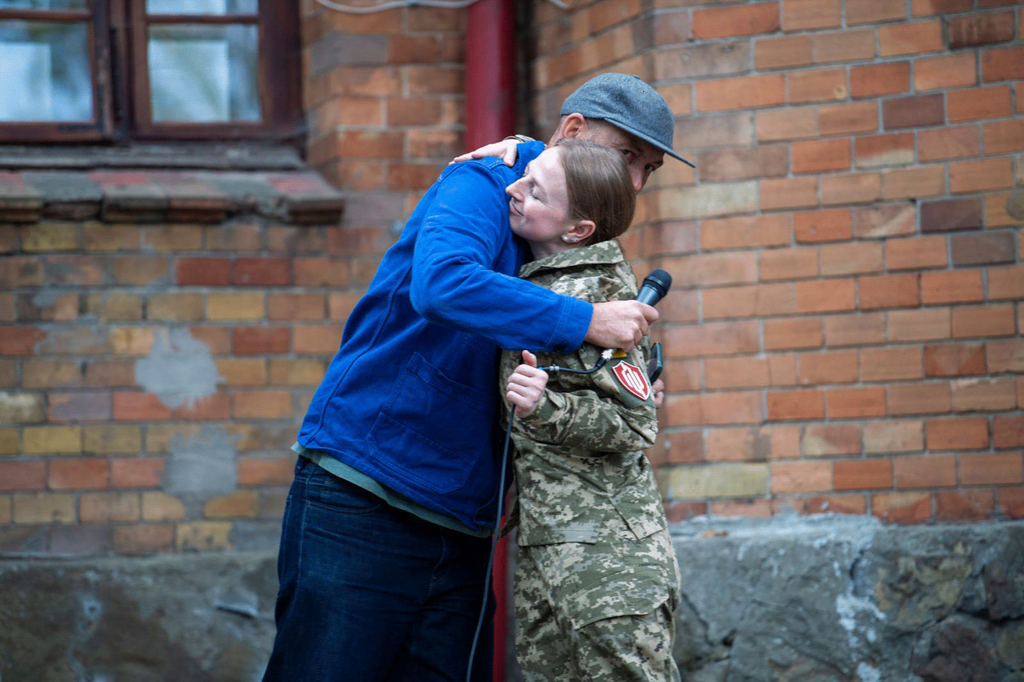
This year's event, the fourth, was held on 29 August 2026. The money went through the 1991 fund to a van for the CIMIC department where Khrystia serves. Transport is essential for logistics in wartime.
"It was especially meaningful to see the project become a way to support my new team. It was a great support and an honour for me to help raise funds for a van that makes our work easier," she says.
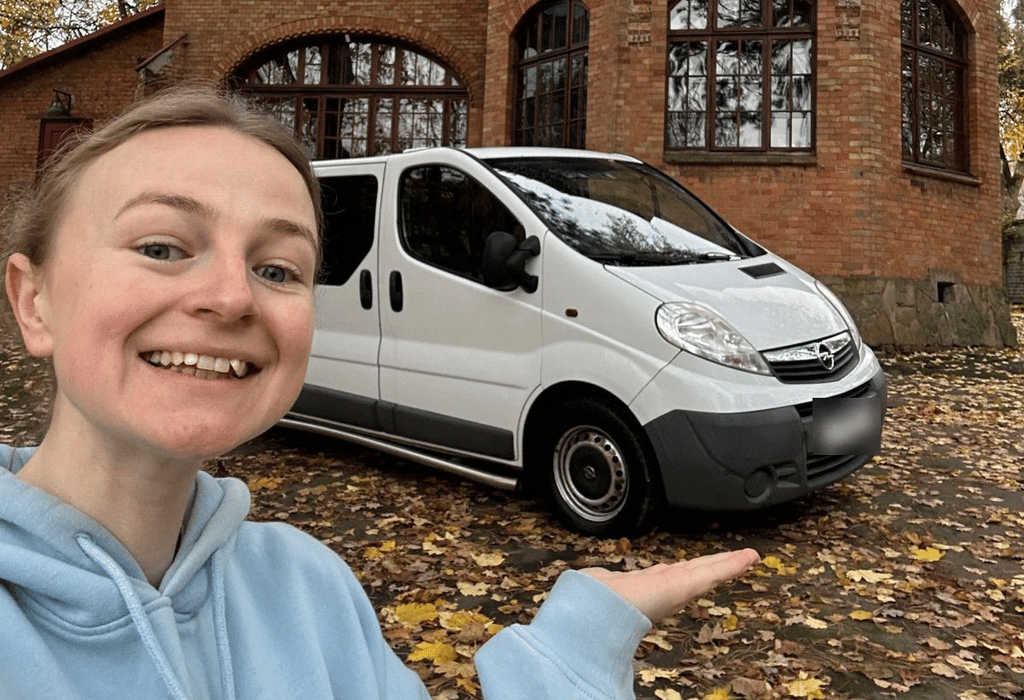
Valerii calls this year's auction one of the highlights of the year.
Is it even possible to focus on work in these circumstances?
Valerii has no doubt.
"Another benefit of being in the army: there is no such thing as impossible to focus on work. You just do it," he says.
Khrystia answers a little differently.
"Some days are full of activities, and after work I'm simply too tired to think clearly. I've learned not to push myself too hard with my civilian job, and to catch up when I have the time and energy," she says.
The myth that it can't be done
Valerii thinks it is a myth that military service cannot be combined with a civilian job.
"People think about it from their own experience as conscripts 40 years ago. The Ukrainian army is huge, with all kinds of positions and schedules. Some people keep their civilian job so they don't leave their employer in the lurch. Others do it because otherwise their families would not get by financially."
Khrystia sees it from another side. She believes many who both serve and work do so because circumstances leave them no choice.
"Unfortunately, they don't have any other options. As soon as we win, people will return to the work and the lives they actually chose, instead of having to fight to protect their families, homes and country."
The team that took over
When almost one in five employees is fully or partly gone, someone else has to do the work.
"The biggest support is that the team took over my responsibilities. That allowed me to focus completely on my service, while Innocode keeps running smoothly," says Valerii.
Khrystia points to the same thing: flexible meeting times and colleagues who take responsibility.
"The team behind me makes it possible. Having colleagues who trust and support you makes all the difference," she says.
But for a technology company delivering digital services to customers in several countries, it is not necessarily easy to replace colleagues with many years of experience and deep knowledge of the systems.
Several of the Scandinavian colleagues travel to Lviv every year, and according to Khrystia they raise funds on every occasion, whether at work events or private parties.
The customers have had to deal with the situation too.
Airmine, which makes pollen forecasts, uses the development team in Lviv. In a blog post in October, CEO Kristin P. Grenan writes that the team has the expertise, reliability and flexibility needed.
"Amid an ongoing war, we deeply appreciate the commitment, care and professionalism they bring to our work together," she writes.
Along the way, several key roles have disappeared because people were suddenly mobilised into the army. According to CEO Bjarte Falck Olsen, the team in Lviv has shown real agility in covering the roles that were needed.
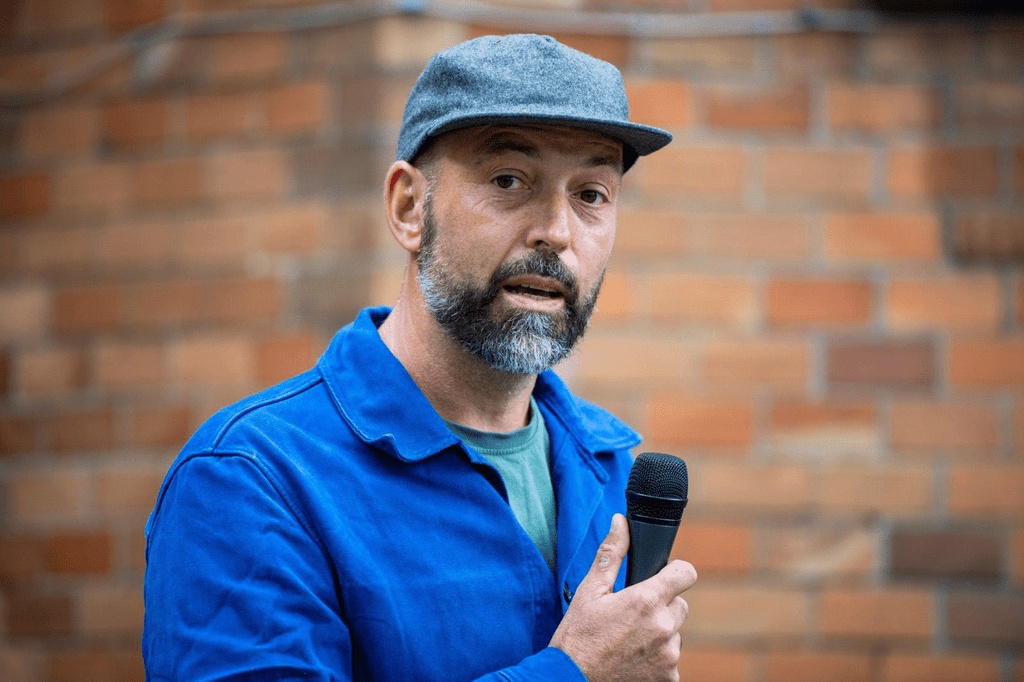
"Combined with the technology shifts we're seeing with AI, this has helped us adopt an 'every day is change' mindset. We fill gaps and keep optimising the roles in our teams and projects as we go," he says.
Running a company in this situation is about much more than margins and financial questions.
"The team and the organisation itself, and building stability for them, almost become the main goal. Luckily, stronger financials and being a stable, good place for our employees come from the same things: better deliveries, a strong client base, and long-term, transparent client and partner relationships," he says.
Innocode tries to be open with clients about the challenges it faces, and according to Bjarte the company meets a lot of understanding and empathy in return.
"So there's no choice but to keep going and keep fighting, both for the company and in the bigger question."
Advice to other IT companies
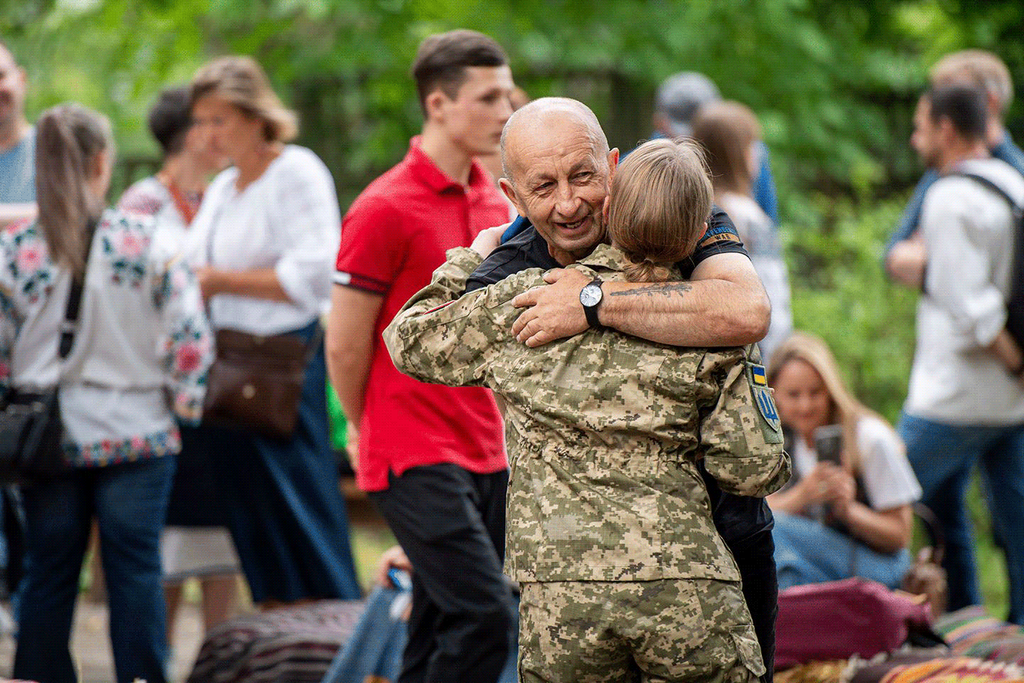
The experiences of recent years have also given Valerii and Khrystia some concrete advice for companies with employees who serve.
"Support them financially if possible. If they are able to work, create conditions for them and give them work. If they are not able to work, see if it is possible to support them without obligations. And if that is not possible either: organise fundraisers for their units. The list of needs is always growing," says Valerii.
Khrystia adds:
"Stay connected. Communication is a form of care as well. Involve your serving colleague in work tasks if they want it, and be patient."
For Valerii, though, it is not only about money, flexibility and practical arrangements. He also has a simple wish for the colleagues who are still in the offices in Scandinavia.
"I miss talking to them. Reach out, and don't be afraid that I'm busy. I can handle that part myself."
How can you help?
Khrystia has three suggestions:
- Talk about Ukraine. Follow and share news about the challenges of everyday life in Ukraine. Unfortunately, there are a lot of shocking stories.
- Give a little, now and then. It does not have to be more than the price of a coffee once in a while. Contributions to organisations like Dzyga's Paw and Come Back Alive provide long-term support.
- Keep Ukrainian culture visible. Visit an exhibition, or read a translated book by a Ukrainian author.
